Foodservice operators are increasingly being asked to make their operations more sustainable. The request may come from a university, health system, corporate leadership team, or customers. It may involve packaging, equipment, food waste, or menu changes. For an operator already balancing food quality, cost, labor, safety, efficiency, and customer expectations, sustainability can feel like one more competing priority.
Sustainability can sound broad or theoretical, but it only becomes useful when it helps us make better everyday decisions. The goal is not to chase a perfect solution. It is to identify practical changes that improve performance and can be maintained in a real foodservice environment.
A Definition That Works
The EPA defines sustainability as using resources responsibly today without limiting future generations’ ability to meet their needs. For foodservice operators, that means considering three connected outcomes when making decisions: people, planet, and profit. Change is not truly sustainable if it protects the environment but cannot support employees, customers, or the financial health of the operation.
Sustainability, while gaining traction across most fields, is not a new concept. The National Environmental Policy Act of 1969 committed “to create and maintain conditions under which humans and nature can exist in productive harmony, that permit fulfilling the social, economic, and other requirements of present and future generations.”
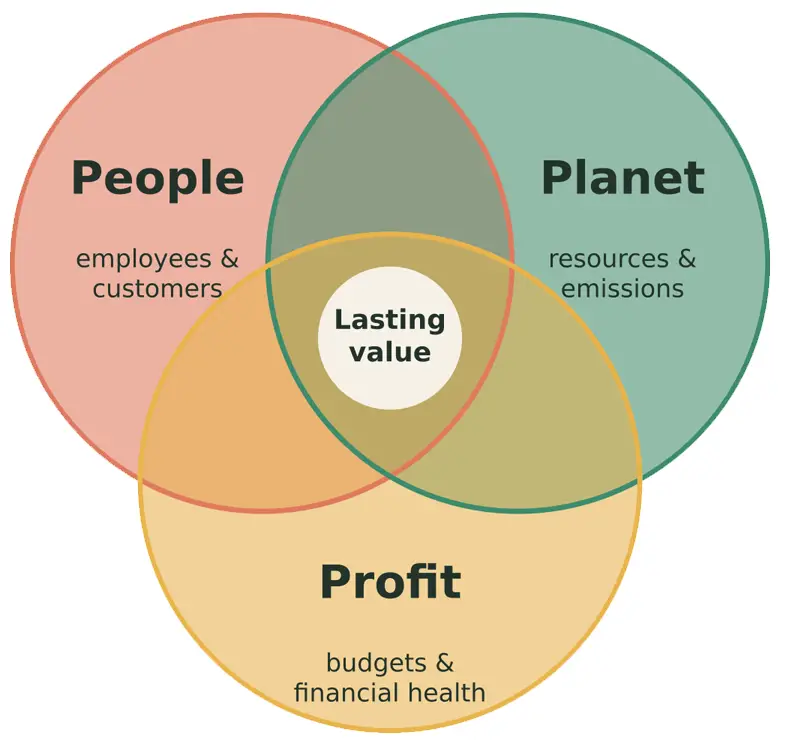
One word in that policy matters especially for foodservice: productive. Sustainability should not automatically mean sacrificing profitability or efficiency. The strongest solutions improve environmental or social outcomes while also working within real budgets, workflows, and staffing constraints. If a change cannot be maintained, it will not create lasting value for people, planet, or profit. Sustainability is therefore more than a product label, a one-time purchase, or a marketing claim. It is a way to improve how the operation performs as a whole.
Sustainability in Foodservice
In foodservice, sustainability shows up in everyday decisions, such as what you buy, how you use equipment, how food moves through the kitchen, and how you support employees. It is not a separate initiative added to the operation. It is a practical way to reduce waste, use resources more efficiently, and strengthen performance over time.
Foodservice is closely connected to the environmental impact of the global food system. The Ellen MacArthur Foundation reports that the agrifood industry is responsible for 25% of human-caused emissions, while one-third of edible food goes uneaten despite growing concerns about food security. These challenges are significant, but they also show where foodservice operations can make a difference.
What Progress Looks Like
A sustainable operation does not get everything right overnight. It identifies where performance can improve, chooses one achievable priority, and works on it with the people closest to the process. Progress comes from making practical changes, learning from the results, and building on what works. The best first step is usually a focused change that fits the operation’s goals, staffing, and budget.
Start with a basic snapshot of current performance and choose one or two priorities instead of trying to solve everything at once. If one station produces more waste than the others, begin there and investigate why. If a high-traffic coffee location is a good place to test new packaging, pilot the change there before expanding it. A focused trial makes it easier to involve staff, track results, learn what works, and adjust before making a larger investment.

Choose a few measures that match the project, such as waste per meal, energy or water use, purchasing cost, labor time, or customer participation. Record a simple starting point before making the change, then compare the results over time. Clear measures help the team see whether the effort is working and decide what to continue, adjust, or expand.
Communicate progress honestly from the start. Avoid “greenwashing,” or making a product, program, or operation appear more sustainable than the evidence supports. Share what has improved, what you are still working on, and how you are measuring progress. Customers, employees, and leaders are more likely to trust the journey when the operation is clear about both results and challenges.
Questions to Jumpstart the Journey
If you’re ready to take the first step toward a more sustainable operation, ask yourself these questions:
- What are we already doing well?
- Where could we waste less food, water, energy, or supplies?
- What is one change we can make this month that doesn’t require a massive change to our operations?
These questions can help you establish a starting point and choose a first project. From there, evaluate options, set practical measures, and build a plan that works across people, planet, and profit. If your team needs help developing a baseline, evaluating those connections, or deciding where to begin, a foodservice sustainability consultant can help turn broad goals into an achievable operating plan.
Think Systems, Not Silos
Sustainable choices rarely affect only one part of an operation. Systems thinking helps operators see how a single decision can influence costs, labor, storage, waste, and resource use across the business.
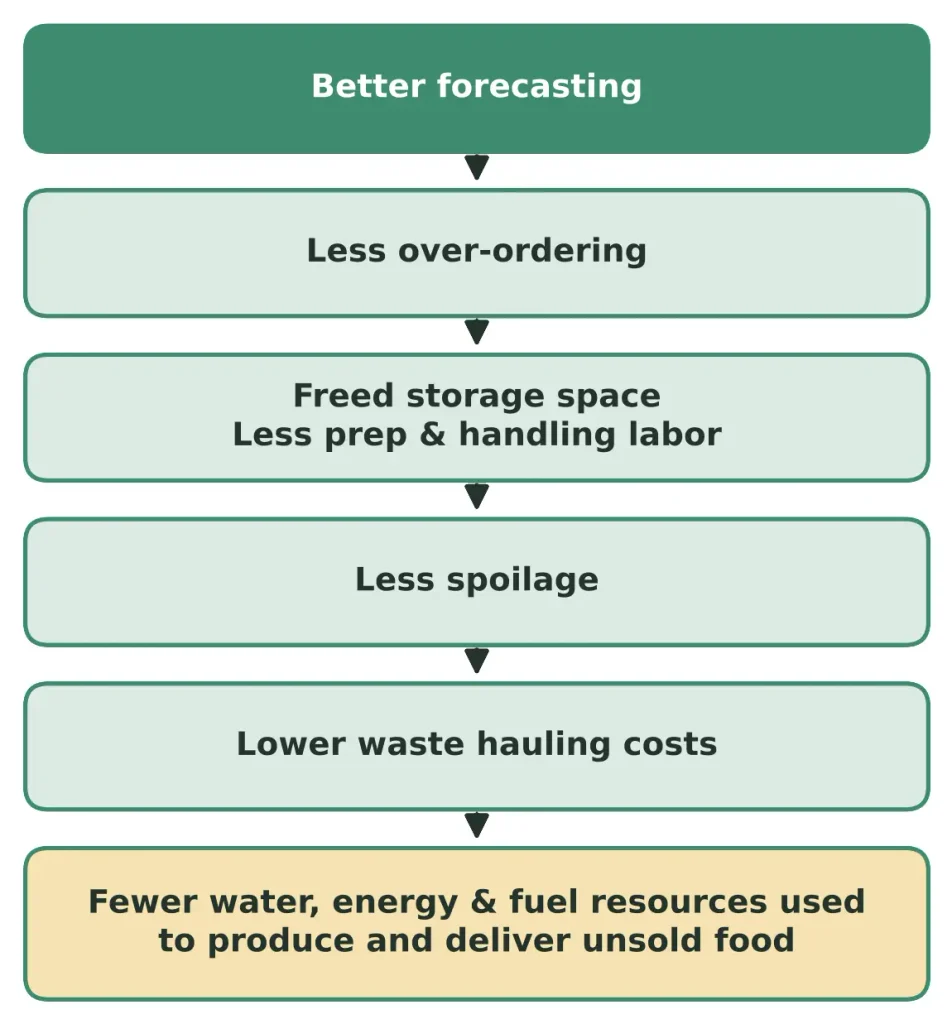
A closer look at forecasting shows how these effects are connected in a system. Better forecasting reduces over-ordering, frees storage space, cuts unnecessary prep and handling labor, limits spoilage, and lowers waste hauling costs. It also reduces the water, energy, and fuel used to produce and deliver food that would go unsold and end up as waste. Considering what happens before purchase, during use, and at end of life is the kind of thinking that changes systems and, ultimately, our environment impact.
Our next article will explore how systems thinking and reframing sustainability support those decisions.
Our OEA Sustainability Team is led by a LEED Green Associate who helps organizations turn ambitious environmental goals into practical, measurable, and lasting results. She holds a master’s degree in Industrial Ecology from TU Delft and Leiden University, with a focus on urban agriculture and food systems. Her experience spans higher education, global consumer goods, and startups, where she has led initiatives in circular economy, sustainable procurement, packaging, waste reduction, and operational strategy.